
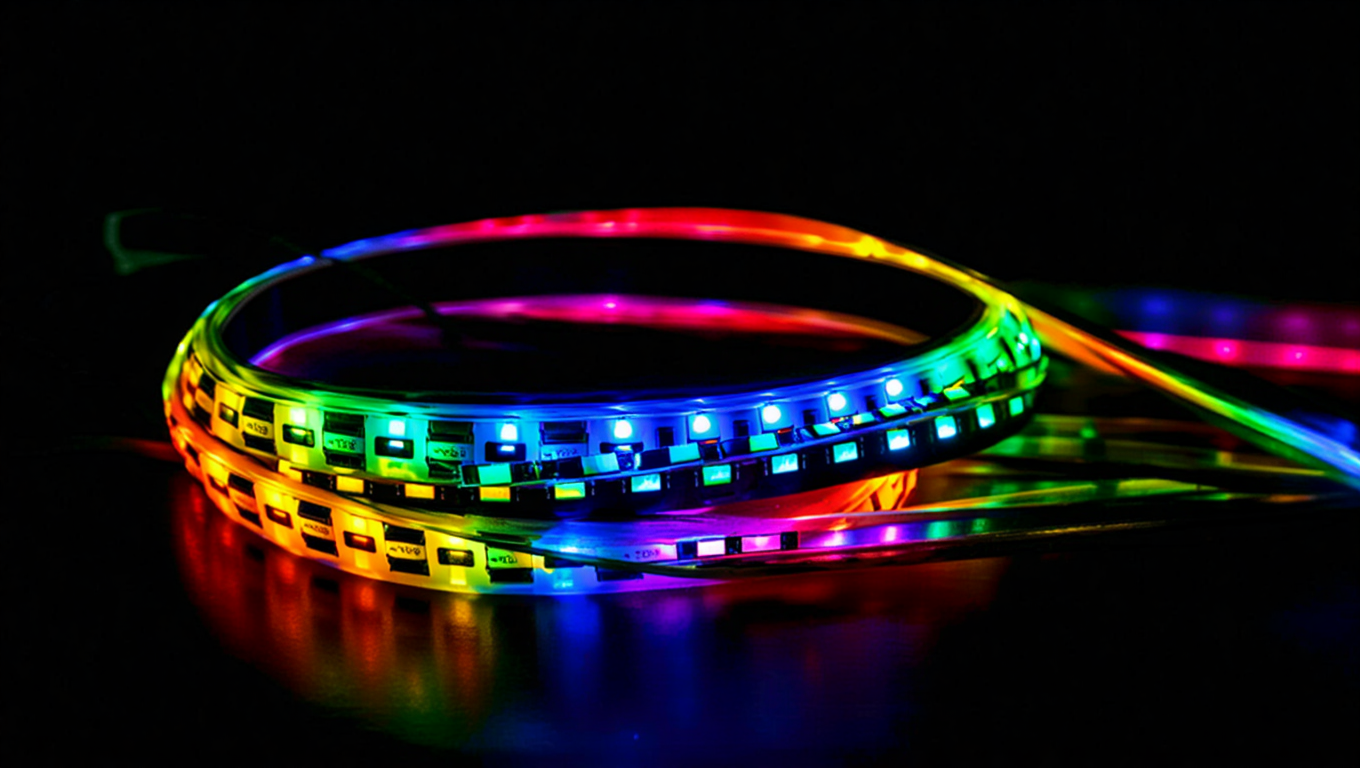
Addressable LED strip lights have become one of the hottest upgrades for cars, gaming setups, and even smart homes. Whether you want to add an ambient glow to your car’s interior, highlight your PC build, or bring vibrant colors into your living room, two LED strips often come up in the conversation: SK6812 and WS2812B.
In this guide, I’ll compare them side by side, covering technical details and real-world uses, so you can confidently decide which LED strip is the best fit for your needs.
Understanding Addressable LED Strip Lights
Before diving into the SK6812 vs WS2812B comparison, it’s worth understanding what makes these strips so unique. Unlike traditional LED strips, addressable models allow individual control of each LED. That means you can program one LED to shine red, the next to glow green, and another to fade blue—all at the same time.
The magic lies in the integrated IC chips built into each LED module. These chips process digital signals from your controller, telling each diode exactly what to do. As a result, you can create effects like chasing lights, rainbow waves, or even music-reactive patterns.
Common Applications of Addressable Strips
- PC case lighting – Many gamers use WS2812B or SK6812 strips to add custom RGB effects to their rigs.
- Car modifications – Interior footwell lights, underglow kits, or custom headlights.
- Home décor & signage – Accent lighting for living rooms, restaurants, or stage designs.
- DIY projects – Makers often pair them with Arduino or Raspberry Pi boards to build creative displays.
SK6812 vs WS2812B – Key Specifications Compared
When you’re choosing between these two strips, the differences can look small on paper, but they make a big impact in real-world setups. Let’s break them down.
Color Range and RGBW Advantage
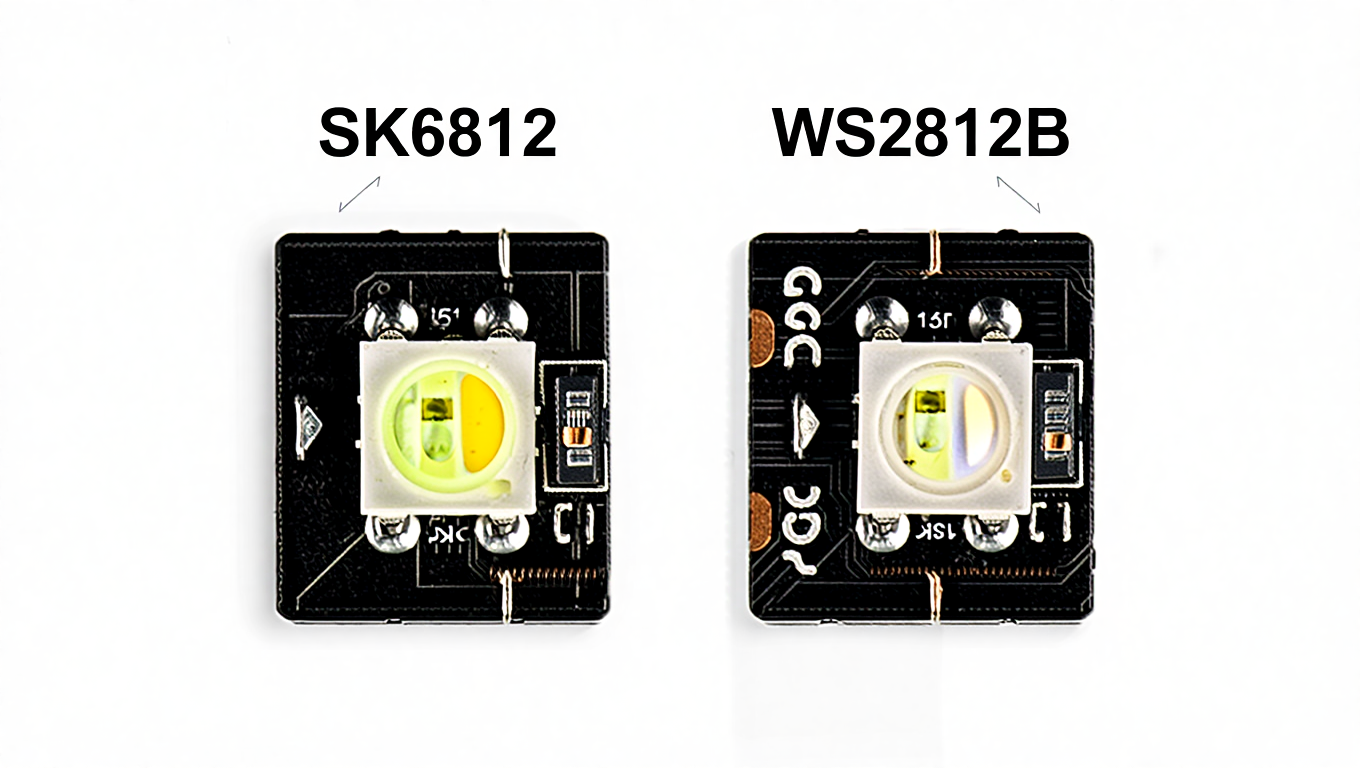
The WS2812B is an RGB strip. That means it mixes red, green, and blue to create colors—including white. However, the “white” often looks tinted, either slightly blue or slightly warm, depending on your settings.
The SK6812 adds a dedicated white diode (RGBW). This delivers pure, accurate white light and also allows for softer pastel shades. If you’re using the strip for photography, PC builds, or areas where true white is important, the SK6812 is the clear winner.
Real-world example: Car owners who want bright, clean interior dome lighting often choose SK6812 because the WS2812B’s “white” feels too colored.
Brightness and Color Rendering
The brightness of each LED is measured in lumens, and while both strips are strong performers, SK6812 tends to edge ahead. Thanks to its RGBW setup, it provides better color rendering and cleaner whites.
WS2812B is still plenty bright for underglow kits or PC setups, but if you need accurate tones (like matching paint colors or photography backgrounds), SK6812 is worth the extra cost.
Voltage and Power Requirements
Both strips are usually powered by 5V, but certain SK6812 variants also support 12V. Why does that matter? A higher voltage option means less voltage drop over long runs, making it easier to light a big installation without injecting power every few feet.
For car owners, this matters: since most vehicles use a 12V system, an SK6812 strip designed for 12V can connect more smoothly without extra converters. On the other hand, WS2812B is widely available and works fine in shorter runs.
Data Signal and Refresh Rate
WS2812B uses a single-wire data protocol, which is simple but has limits. Its PWM frequency sits around 400Hz–800Hz, which may cause flicker if you record video.
SK6812, however, operates at a higher PWM frequency (800Hz–1200Hz). That means smoother animations and less flicker, especially for high-speed effects or camera recordings. For YouTubers, streamers, or car vloggers, that higher refresh rate makes a noticeable difference.
Build Quality and Durability
Both strips come in different waterproof ratings (IP20 for indoor, IP65/IP67 for outdoor). SK6812 strips often feature slightly wider PCBs, which improve heat dissipation. Over long runs, this helps extend lifespan and reduces brightness drop-off.
Think of it like comparing OEM vs aftermarket car parts: the WS2812B works fine for basic projects, but the SK6812 feels a little more “premium” in build.
Installation & Compatibility
Once you’ve picked your strip, the next big question is: how easy is it to install?
Microcontroller Support
Both SK6812 and WS2812B are compatible with Arduino, ESP32, Raspberry Pi, and most third-party LED controllers. The only difference is programming. Because SK6812 has an extra white channel, its coding libraries require more handling. Beginners might find WS2812B slightly easier to start with, while SK6812 rewards users who want advanced effects.
Wiring and Signal Stability
LED strips require careful wiring to perform well. For long runs, you’ll need thicker gauge wire to prevent voltage drop. Adding a capacitor across the power supply and a resistor on the data line can also protect your LEDs from surges.
Both strips benefit from this setup, but SK6812, thanks to its higher refresh rate, tends to stay more stable when wired properly.
Ease of Use for Beginners
If you’re a first-time builder, WS2812B strips are often easier to find pre-soldered with connectors, making them more “plug-and-play.” SK6812 strips are available too, but they’re usually targeted at advanced users who don’t mind custom wiring.
Buyer Considerations – Which One Should You Choose?
At this point, it’s less about “which is better” and more about which is better for you.
Cost and Availability
- WS2812B is cheaper and easier to find online or in local stores.
- SK6812 costs a little more due to its RGBW chip and higher refresh rate.
If you’re on a budget, WS2812B offers plenty of performance. If you’re chasing top-tier visuals, SK6812 justifies the extra expense.
Lifespan and Replacement
Both strips are rated for 30,000–50,000 hours, but factors like heat, wiring, and voltage spikes can cut that short. WS2812B is affordable to replace, but SK6812’s durability means fewer replacements in the long run.
For car owners: if you’re installing underbody lights, SK6812’s build quality can handle vibration and heat better, which means fewer headaches later.
Energy Efficiency
On paper, both strips consume similar wattage per LED, but SK6812’s RGBW can draw slightly more when all four diodes are lit. For everyday ambient lighting, the difference is minor. But in a large installation (say, a full room setup), electricity costs can add up over time.
Use Case Scenarios
- PC Lighting → SK6812 (for true whites and clean color transitions)
- Budget Ambient Lighting → WS2812B (cheaper, easier to install)
- Photography/Video → SK6812 (no flicker, better whites)
- Car Mods → SK6812 (12V options work better with car systems)
Technical Overview: SK6812 vs WS2812B
When comparing SK6812 and WS2812B LED strip lights, it is essential to understand how they are designed, how they function, and what makes them suitable for different applications. Both are addressable RGB LEDs widely used in decorative lighting, DIY projects, and commercial installations, but their technical differences can affect brightness, efficiency, color accuracy, and reliability.
LED Architecture and Build Quality
- WS2812B integrates the LED and driver IC into a single 5050-sized package. Each LED can be individually controlled with a single data line, simplifying wiring but limiting data transmission speed. It uses standard RGB diodes, meaning it blends red, green, and blue light to create various colors.
- SK6812 follows a similar integration concept but introduces higher efficiency chips with improved stability. Many SK6812 strips also include an RGBW option, meaning they add a dedicated white diode. This provides more accurate whites and pastel shades compared to RGB-only mixing.
Power Efficiency and Heat Management
Power consumption varies slightly between the two types:
- WS2812B typically consumes about 60mA per LED at full white brightness (all RGB channels on). This can create significant power demands when using long strips. Heat buildup is also a concern if proper cooling and power distribution are not considered.
- SK6812 is slightly more efficient, often consuming less current while still providing comparable or even brighter illumination. This efficiency reduces heat generation and allows longer strips to be powered without voltage drops.
For installations requiring many meters of strip lighting, SK6812’s efficiency makes it more suitable, especially when energy cost and heat management are priorities.
Color Quality and Accuracy
Color rendering is where the most significant difference appears:
- WS2812B relies on RGB mixing to create white and pastel tones. However, this often results in whites that appear slightly blue or greenish, depending on the diode quality.
- SK6812 is available in RGBW configurations, meaning it has a dedicated white LED channel. This produces true whites (available in cool white, warm white, or neutral white options) and softer pastels with higher accuracy. For applications where natural-looking lighting is important—like photography, retail displays, or interior décor—SK6812 has a clear advantage.
Data Transmission and Refresh Rates
- WS2812B operates with an 800kHz data transfer protocol. While this is adequate for most DIY and decorative lighting, it limits refresh speed when controlling large numbers of LEDs. In massive installations, visual lag or color inaccuracies may appear.
- SK6812 also supports 800kHz but is known to handle timing tolerances better. This results in smoother animations, reduced flicker, and more consistent performance across long strips.
When using advanced controllers like ESP32 or Arduino with fast effects, SK6812 generally provides smoother output compared to WS2812B.
Durability and Reliability
- WS2812B strips are widespread and popular, but their reliability heavily depends on the supplier. Inconsistent soldering, weaker PCB boards, and lower-quality protective coatings are common in cheaper options.
- SK6812 strips, due to stricter quality control, are often more robust. They perform better under continuous operation and in environments where temperature fluctuations or extended use are expected.
Availability and Compatibility
- WS2812B LEDs are widely available at very low cost. Almost every hobby electronics retailer and online marketplace stocks them, making them a go-to choice for budget projects. They are compatible with most existing controllers, software libraries, and tutorials, which adds to their popularity.
- SK6812 is slightly more expensive and not as universally available, though its popularity has grown rapidly due to the RGBW option. They are fully compatible with WS2812B code libraries, meaning no major changes are needed when switching between them.
Cost, Lifespan & Replacement Considerations: SK6812 vs WS2812B
When choosing between SK6812 and WS2812B LED strips, cost, lifespan, and ease of replacement are practical factors that directly influence long-term value. While technical performance matters, these real-world aspects determine whether the investment will be worth it for DIY users, car owners, or businesses running large lighting projects.
Initial Purchase Cost
- WS2812B is the budget-friendly option. Since it has been on the market longer, it benefits from mass production and widespread availability. Prices typically range between $8 and $12 per meter (30 to 60 LEDs), depending on density and waterproofing. Bulk orders can bring the cost even lower, making it ideal for beginners and hobby projects.
- SK6812 is usually 20–40% more expensive than WS2812B. Standard RGB versions cost around $12–$15 per meter, while RGBW variants often start at $15 and can go up to $20 per meter. The extra cost reflects better color rendering, efficiency, and improved build quality.
Lifespan and Durability
- WS2812B strips have an average rated lifespan of 25,000 to 30,000 hours under normal use. However, real-world performance can vary greatly depending on the manufacturer. Cheaper versions often suffer from premature diode failure, solder joint cracks, or inconsistent brightness after a few months of heavy use.
- SK6812 strips generally last longer, with a rated lifespan of 30,000 to 50,000 hours. Their improved thermal management and higher-quality diodes make them more stable under continuous operation. RGBW versions also experience less stress since the white diode reduces the need for full RGB mixing.
Replacement Costs and Maintenance
- WS2812B replacements are cheap and easy to find. If one section fails, you can often replace it with a widely available spare at low cost. The main downside is the lack of consistency: replacing a strip from a different batch or supplier may result in slight color mismatches.
- SK6812 replacements are more expensive but more consistent. Because they are produced with tighter quality control, replacing one section with another usually results in better color and brightness uniformity.
Power Supply and Long-Term Cost
The type of LED also affects ongoing costs:
- WS2812B consumes more power overall, which means higher electricity usage and larger power supplies for big projects. Over time, this adds to operational costs.
- SK6812 is more power efficient. Although the upfront cost is higher, electricity savings can balance this out for installations that run for many hours a day. For commercial displays, this efficiency can translate into meaningful long-term savings.
Conclusion
When comparing SK6812 vs WS2812B, the choice depends on your priorities. WS2812B is cost-effective, easy to find, and perfect for hobby projects. SK6812, with higher efficiency, smoother animations, and true white capability, is the better choice for professionals and color-critical applications. Ultimately, budget-driven buyers may prefer WS2812B, while quality-focused users will benefit more from SK6812.
FAQs
Are SK6812 and WS2812B interchangeable?
Yes, they are largely interchangeable because both use the same communication protocol at 800kHz. Most Arduino and ESP32 libraries support both chips. However, SK6812 may include an extra white channel (RGBW), which requires additional coding adjustments to unlock its full potential.
Do SK6812 LED strips consume less power than WS2812B?
Generally, yes. SK6812 strips are slightly more power-efficient than WS2812B while maintaining equal or greater brightness. This efficiency reduces heat output, makes long installations more practical, and lowers electricity costs over time, especially in projects requiring many meters of continuous LED lighting.
Why do SK6812 LEDs look better for white and pastel colors?
The main reason is the addition of a dedicated white diode in RGBW SK6812 strips. Instead of mixing red, green, and blue to simulate white, SK6812 produces natural whites directly. This results in cleaner whites, softer pastels, and better accuracy in color-sensitive applications like photography or retail.
Which LED strip is better for beginners?
WS2812B is often considered beginner-friendly because of its wide availability, low cost, and extensive tutorials. It’s an excellent choice for learning addressable LEDs. SK6812 works just as easily with the same controllers but is slightly pricier, making it more appealing for users focused on color accuracy and quality.
How long do SK6812 and WS2812B strips last?
Both LED types typically last between 30,000 and 50,000 hours with proper use. However, heat buildup and poor-quality clones can shorten lifespan significantly. SK6812 strips, due to tighter quality control and better efficiency, tend to last longer under heavy use compared to cheaper WS2812B options.