
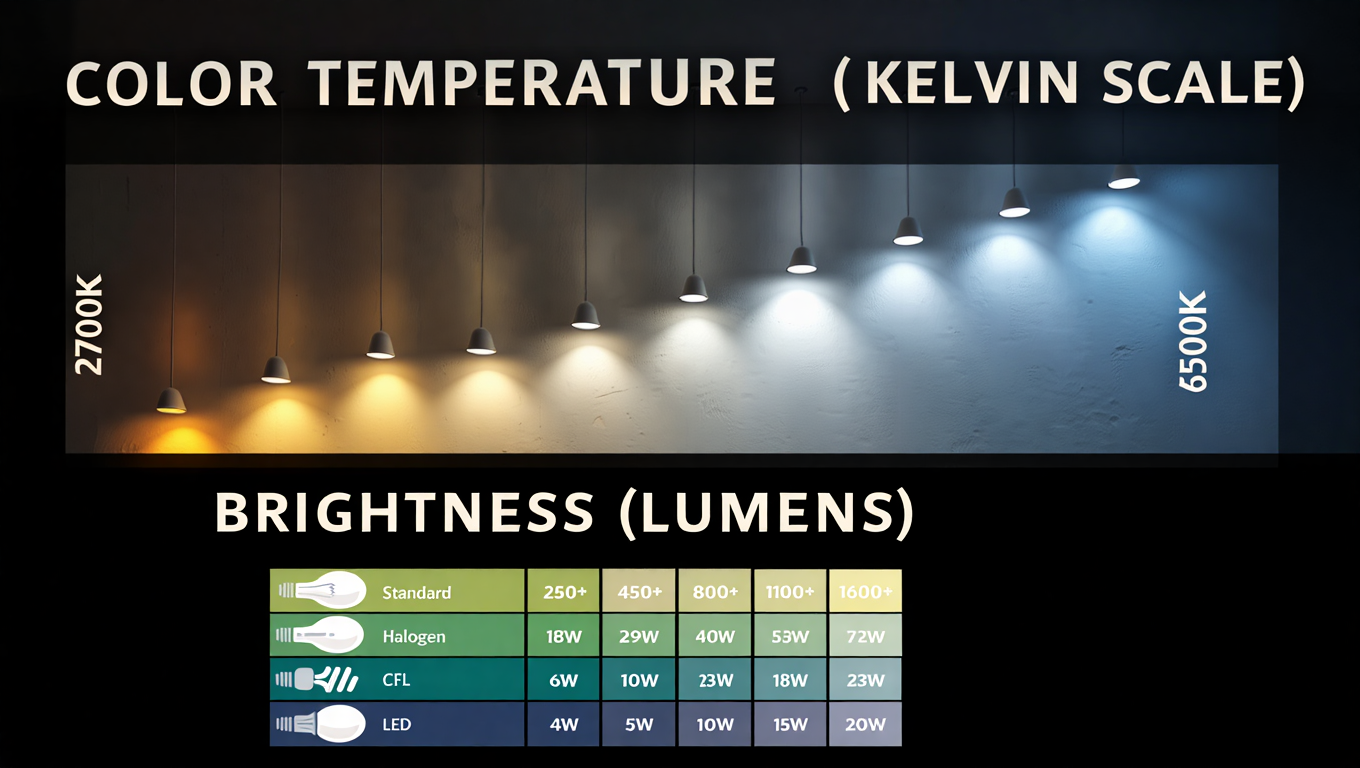
Choosing the right lighting can feel confusing because manufacturers throw around terms like Kelvin and Lumens. Many shoppers mistake one for the other, or rely only on watts, which no longer accurately indicates brightness. Kelvin measures color temperature—the tone of light—while lumens measure the actual brightness. Understanding both is crucial for homes, offices, cars, or outdoor projects.
This guide breaks down their differences, explains how they affect your space, and gives practical tips for selecting the perfect light for your needs, saving money and avoiding costly mistakes.

Understanding the Basics of Kelvin and Lumens
Before you make any lighting purchase, you should know what these two terms mean. They are not interchangeable, but they work together to define the overall lighting experience.
What is Kelvin?
Kelvin (K) is a unit that measures color temperature. It tells you whether a light appears warm, neutral, or cool.
- Warm white (2700K–3000K): This yellowish tone is similar to incandescent bulbs. Perfect for bedrooms, living rooms, or restaurants because it creates a cozy and relaxing ambiance.
- Neutral white (3500K–4100K): A balance between warm and cool, ideal for kitchens, offices, or study areas. It provides clarity without feeling harsh.
- Cool white/daylight (5000K–6500K+): Blueish, crisp light that mimics daylight. Great for garages, workshops, or hospitals where precision and visibility are critical.
Think of Kelvin as the “mood setter.” Warm light soothes, cool light energizes. For car interiors, a 3000K strip gives a relaxing glow, while a 6000K headlight replicates daylight for safe night driving.
What are Lumens?
Lumens measure the total light output—how bright a bulb actually is. Higher lumens mean a brighter light, while lower lumens indicate softer illumination.
- Example: A 60W incandescent bulb produces about 800 lumens, while a 10W LED can produce the same brightness. That’s why watts are no longer reliable for judging brightness with LEDs.
- Lumen guides exist for different spaces:
- Bedrooms: 1000–2000 lumens
- Kitchens: 3000–4000 lumens
- Living rooms or offices: 2000–5000 lumens depending on size
- Bedrooms: 1000–2000 lumens
Lumens tell you whether the light is strong enough for a given space, while Kelvin tells you whether it feels warm or cold. Both must be considered together for an optimal result.
Kelvin vs Lumens – Key Differences
While Kelvin and lumens are often printed side by side on LED packaging, their purposes are distinct:
- Kelvin measures color temperature (warmth or coolness of light).
- Lumens measure brightness (how much light is emitted).
- Human perception doesn’t always match the numbers. A 3000K bulb can feel cozy even at 2000 lumens, whereas a 6000K bulb might feel harsh at the same brightness.
Another common confusion is with watts, which measure power consumption, not brightness. Two bulbs consuming 10W may have very different lumens depending on efficiency. Similarly, lux measures light intensity per square foot, whereas lumens measure total output.
Real-world example: In a home office, a 4000K, 3000-lumen LED panel gives enough clarity to work comfortably without eye strain. Installing the same lumens at 2700K may feel too soft, and at 6000K may feel cold and stark.
How Kelvin Affects Lighting Choices?
Kelvin plays a huge role in setting the atmosphere of a room or space. Choosing the wrong color temperature can create discomfort, even if the brightness is perfect.
- Warm white (2700K–3000K): Ideal for relaxing spaces like bedrooms, living rooms, and lounges. It complements wood furniture and soft textiles. Restaurants and hotels often use this to create inviting environments.
- Neutral white (3500K–4100K): Works well for kitchens, offices, and bathrooms. Provides clarity for reading, cooking, and performing tasks without looking too harsh or too cozy.
- Cool white/daylight (5000K–6500K+): Best for garages, workstations, or medical environments where accurate color perception is needed. Car headlights are typically in this range for safe night visibility.
Tip: For car interiors, avoid too cool (above 6000K) for cabin lights—it can feel sterile. For task lighting, daylight Kelvin improves visibility and alertness.
Psychologically, warm lights create calm and relaxation, while cooler lights can improve focus and productivity. Choosing the right Kelvin ensures the space feels the way you intend.
How Lumens Affect Lighting Choices?
While Kelvin determines the tone, lumens determine whether the space is bright enough. The correct lumen count ensures you have functional lighting without wasting energy.
- Rooms: For average-sized rooms, use 2000–5000 lumens depending on task and ambiance.
- Task lighting: Desks, workbenches, or kitchen counters may require 3000–5000 lumens for optimal visibility.
- Energy efficiency: LEDs produce more lumens per watt than incandescent or CFL bulbs, making them cost-effective over time.
Example: A 60W incandescent bulb produces around 800 lumens. To light a 200 sq. ft. living room comfortably, you’d need 5–6 such bulbs (~4000–4800 lumens). Using LEDs, you could achieve the same brightness with 40–60W total, saving energy.
For cars, lumen rating matters for headlights and fog lights. A 1200-lumen LED headlight at 6000K can provide clear, crisp illumination for night driving, while low-lumen strips inside the cabin (300–500 lumens) are sufficient for ambient lighting.
Kelvin & Lumens Together – Finding the Right Balance
The most important principle in lighting is that Kelvin and lumens should be chosen together. You can have a very bright light with the wrong color temperature, or a perfectly warm tone that’s too dim.
- Example: 800 lumens at 2700K provides soft, cozy illumination for a bedroom.
- Example: 800 lumens at 5000K produces a harsh, bright light that may be uncomfortable for relaxing spaces.
When buying bulbs, check both specifications: lumens for brightness, Kelvin for tone. Matching them correctly ensures the room or car interior looks and feels as intended.
Buyer Considerations – Choosing the Right Lighting
When shopping for bulbs or LED strips, understanding both Kelvin and lumens helps you select the right product for your needs. Many buyers focus on price or watts alone, but considering brightness, color temperature, and energy efficiency ensures long-term satisfaction.
Cost and Availability
- LED bulbs are now widely available in various lumen and Kelvin ratings. A 60W-equivalent 2700K LED can cost $5–$12 per bulb, while higher-lumen or daylight (5000K–6500K) bulbs may cost slightly more.
- Specialty bulbs with precise color rendering (CRI > 90) often cost more but are worth it for photography, art studios, or home offices.
- Bulk purchases for homes or commercial spaces can save 15–25%, making LED upgrades cost-effective.
Lifespan and Replacement
- LED lifespan ranges from 15,000–50,000 hours depending on quality, brand, and usage. High-quality bulbs maintain brightness and color accuracy longer.
- Heat and over-voltage can reduce lifespan. Installing bulbs in enclosed fixtures or without proper ventilation may accelerate degradation.
- Choosing correct lumens and Kelvin for the space prevents overuse of dim bulbs or excessively bright lights, extending bulb life.
Energy Efficiency
- LEDs provide more lumens per watt than CFLs or incandescent bulbs.
- Selecting the right lumens reduces the need for multiple bulbs and lowers energy bills.
- Example: 800 lumens LED consumes 10–12W, whereas a comparable incandescent uses 60W. Over years, energy savings are significant.
Common Mistakes to Avoid
Many homeowners and car owners make avoidable errors when choosing lighting:
- Confusing watts with lumens – A 10W LED can be brighter than a 60W incandescent. Always check lumens for brightness.
- Ignoring Kelvin – Using a 6000K bulb in a bedroom creates a cold, sterile environment, while a 2700K bulb in a workspace may feel too soft.
- Overlighting or underlighting – Too many lumens in a small room can feel harsh; too few lumens in a large area leads to dim, uncomfortable lighting.
- Neglecting dimmability – Not all bulbs are compatible with dimmers. Using non-dimmable LEDs with dimmer switches can cause flickering.
- Buying cheap, low-CRI bulbs – Poor color rendering can distort colors in interiors, cars, or photography setups.
Practical Tips for Choosing the Right Light
- Start with the room purpose – Relaxation areas benefit from warm 2700K–3000K light, while work areas thrive with neutral 4000K–4500K or daylight 5000K+.
- Check lumens based on space size – Use a simple guide: 20 lumens per square foot for ambient lighting, 50 lumens per square foot for task lighting.
- Use dimmers or adjustable bulbs – Flexible control allows you to adjust brightness and mood without changing bulbs.
- Consider LED quality and CRI – Higher CRI (>80) preserves true color appearance, especially important in kitchens, bathrooms, or car interiors.
- Car lighting – Interior ambient LEDs: 300–500 lumens, 2700K–4000K for warm or neutral glow. Headlights: 1200+ lumens, 5000K–6000K for daylight-like clarity.
Conclusion
Understanding Kelvin vs Lumens is crucial for creating effective and comfortable lighting setups. Kelvin sets the mood—warm, neutral, or cool—while lumens determine brightness. Choosing the right combination improves comfort, reduces energy costs, and ensures proper visibility for homes, offices, or vehicles. Always consider room purpose, size, and bulb quality before buying. For the best selection of energy-efficient, high-quality lighting solutions, check our store to find bulbs with the perfect Kelvin and lumen combination for your project.
FAQs
Is Kelvin more important than lumens when buying a bulb?
Both are important. Kelvin determines the color tone (warm, neutral, or cool), while lumens measure brightness. For comfort, both should match the room’s purpose: warm Kelvin for relaxation, high lumens for visibility. Ignoring either may result in harsh or insufficient lighting.
How many lumens do I need for a living room?
Typically, 2000–5000 lumens are sufficient depending on room size and ceiling height. For ambient lighting, aim for 20–30 lumens per square foot. Task areas like reading corners may require higher lumens to ensure adequate visibility without eye strain.
What Kelvin is best for reading?
Neutral to daylight temperatures (4000K–6000K) are ideal. This range provides clear, crisp lighting that reduces eye fatigue while preserving contrast. Warm light (2700K–3000K) may feel too soft and dim for extended reading sessions.
Can I change Kelvin or lumens after buying a bulb?
No, Kelvin and lumens are fixed properties of the bulb. To adjust lighting, use dimmable bulbs or multi-Kelvin adjustable LEDs. Alternatively, swap bulbs for different Kelvin or lumen ratings to achieve the desired brightness and color tone.
Why do some LED bulbs show both lumens and Kelvin on packaging?
Lumens indicate brightness, Kelvin indicates color temperature. Both are essential for selecting the right light for your space. Higher lumens ensure visibility, while appropriate Kelvin ensures the light feels comfortable and fits the desired ambiance.