
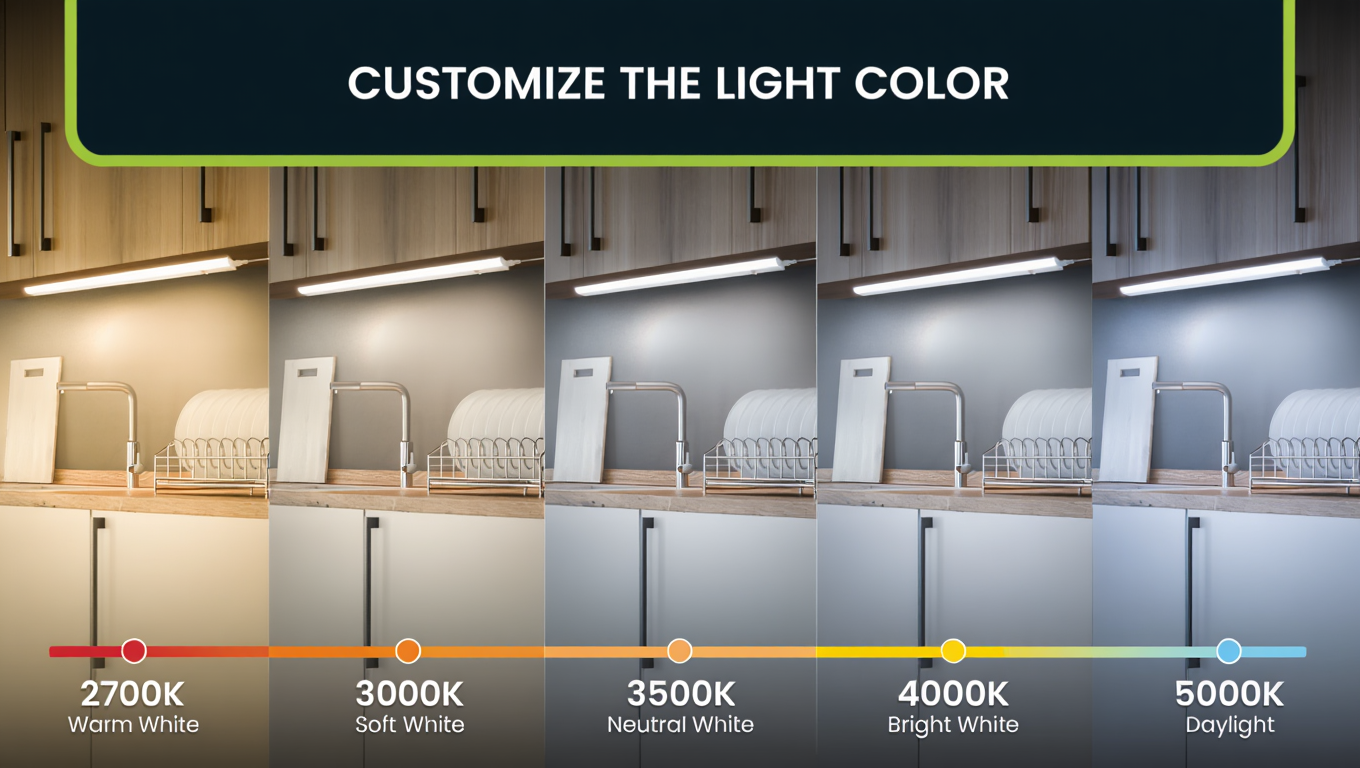
Choosing the right color lighting for a kitchen can feel overwhelming. Many homeowners focus solely on brightness, forgetting that color temperature and light quality greatly influence mood, functionality, and food presentation. Poor lighting can make meal prep difficult, distort the appearance of food, and create an uninviting atmosphere. The right lighting enhances your cooking experience, showcases your kitchen design, and ensures safety in workspaces.
In this guide, I’ll explore how to select the perfect color temperature for your kitchen, explain lighting for different zones, and offer practical LED tips for energy efficiency and style.
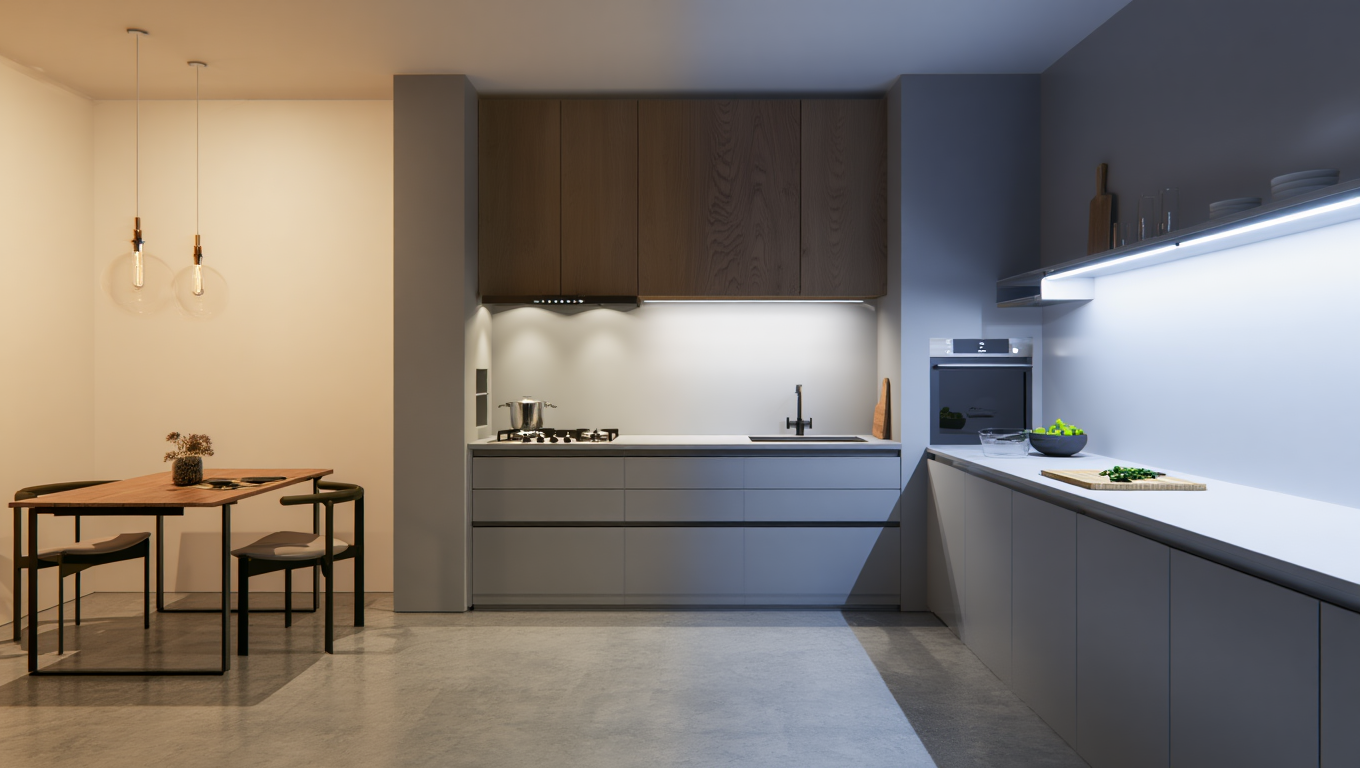
What is Color Temperature?
Color temperature describes the appearance of light emitted by a bulb. Lower Kelvin values produce warm, yellowish tones, while higher Kelvin values produce cooler, bluish tones. For example:
- 2700K–3000K: Warm, cozy, and relaxing — ideal for dining and gathering areas.
- 3500K–4100K: Neutral, balanced lighting — perfect for workspaces and general kitchen illumination.
- 5000K–6500K: Cool, daylight-like lighting — ideal for precision tasks and areas requiring high visibility.
Understanding these differences is essential, as each color temperature influences both aesthetics and comfort for humans, and even pets may react differently to harsh or intense lighting.
Warm vs Cool vs Neutral Lighting
Warm lighting creates a cozy, inviting atmosphere, neutral lighting balances warmth and brightness for functional areas, and cool lighting delivers a crisp, clean look suitable for task lighting. For example, a warm 2700K light works well for a breakfast nook, while neutral 4000K lighting ensures clarity on countertops, and cool 5000K lights can be used for detailed cooking tasks like baking or chopping vegetables. Using the right combination prevents eye strain and highlights colors accurately.
Kitchen Zones and Lighting Needs
Not every area of the kitchen requires the same lighting. Dividing the space into zones ensures each area is lit for both function and style.
Ambient Lighting
Ambient lighting provides overall illumination. This is typically achieved through ceiling-mounted fixtures, recessed lights, or flush-mount ceiling lamps. For ambient lighting:
- Use warm to neutral tones (2700K–4000K) to create an inviting atmosphere.
- Avoid using harsh cool-white lights for ambient purposes, as they can make the kitchen feel sterile.
- Example: Recessed lights combined with a central flush-mount fixture can deliver even illumination without harsh shadows.
Task Lighting
Task lighting focuses on work areas like countertops, islands, and stovetops. Proper task lighting ensures visibility for detailed kitchen tasks:
- Recommended color: Neutral to cool white (3500K–5000K) for clarity.
- Common fixtures: Under-cabinet LED strips, pendant lights over islands, or directional track lighting.
- Real-world tip: Neutral white under-cabinet LEDs prevent color distortion while prepping ingredients, allowing accurate assessment of food colors.
Accent Lighting
Accent lighting is used to highlight design features such as cabinets, shelves, or islands. While not essential for cooking, it adds depth and style to the space:
- Recommended color: Warm or tunable LEDs for flexibility and ambiance.
- Placement: Inside cabinets, along shelves, or under islands.
- Tip: Avoid flashing or overly bright RGB effects near prep areas; subtle static lighting creates sophistication while remaining comfortable for family and pets.
LED Considerations for Kitchen Lighting
LED lights are energy-efficient, long-lasting, and highly versatile. Choosing the right LED involves understanding lumens, CRI, dimmability, and color temperature.
Choosing LED Bulbs
- Focus on lumens instead of wattage to determine brightness — for example, 800 lumens is sufficient for a countertop regardless of wattage.
- High Color Rendering Index (CRI 80+) ensures that food colors appear natural and vibrant.
- Select bulbs with appropriate beam angles: wide for ambient lighting, narrow for task areas.
Dimmable vs Non-Dimmable LEDs
- Dimmable LEDs provide flexibility for different kitchen activities, from bright prep work to relaxed evening dining.
- Ensure fixtures are compatible with dimmable bulbs to prevent flicker or shortened lifespan.
- Example: Pendant lights over an island can be at 100% brightness during cooking and dimmed to 50% during meals.
Energy Efficiency and Lifespan
- LEDs use up to 75–80% less energy than incandescent bulbs.
- Typical lifespan ranges from 15,000 to 25,000 hours depending on quality.
- Replacement costs are low over time, making LEDs a cost-effective choice.
- Choose reputable brands to ensure consistent brightness, color temperature, and flicker-free performance.
Combining Multiple Light Sources
A functional, stylish kitchen uses layered lighting, combining ambient, task, and accent lights. Proper layering balances practicality with aesthetics.
Layered Lighting Approach
- Ambient: Ceiling fixtures or recessed lights for general illumination.
- Task: Under-cabinet LED strips, pendants, or track lighting for work areas.
- Accent: LED strips or spotlights to highlight design features.
Example: 3000K recessed ceiling lights for warmth, 4000K under-cabinet lights for accurate task lighting, and warm LED strips in glass cabinets for subtle evening ambiance.
Avoiding Common Mistakes
- Overusing cool-white LEDs can create harsh, uncomfortable lighting.
- Poorly placed lights can cast shadows on work surfaces.
- Mixing inconsistent color temperatures may result in visual discomfort and uncoordinated appearance.
Practical Tips Before Buying or Installing
- Test bulbs before installation to verify true color and brightness.
- Keep consistent color temperatures within each zone for uniformity.
- Use dimmable or tunable LEDs to adapt to different activities and times of day.
- Consider fixture placement, beam angle, and style for functionality and aesthetics.
- For households with pets, avoid glare at eye level to prevent discomfort for animals.
Advanced Lighting Tips for Kitchens
Selecting the right color temperature is just one piece of the puzzle. Advanced tips involve fixture placement, layering techniques, and smart controls to make your kitchen both functional and visually appealing.
Use Layered Lighting Strategically
Layered lighting balances ambient, task, and accent lights. Ambient lighting provides general illumination, while task lights focus on specific work areas like countertops or islands, and accent lights highlight design features.
Combining these layers allows homeowners to adapt the kitchen for different activities — cooking, cleaning, entertaining, or casual dining. For example, a kitchen island might use a neutral 4000K pendant light for prep work, while warm 3000K ambient ceiling lights create a cozy evening atmosphere.
Incorporate Adjustable Fixtures
Adjustable fixtures like dimmable LEDs or track lights allow you to control brightness and focus. Dimming capability is crucial for creating flexible lighting zones. During food prep, you may want high lumens at neutral color temperature; during dinner, dimmed warm light creates a relaxing environment.
Track lights can also be angled toward work areas or art pieces, giving you complete control over your kitchen’s mood and functionality.
Consider Smart Lighting Solutions
Smart LED systems can be programmed to mimic natural light cycles. For instance, cooler tones during the day for productivity, gradually shifting to warmer tones in the evening to signal winding down.
Some systems allow you to create “scenes” for cooking, entertaining, or cleaning, giving both flexibility and energy efficiency. Smart controls also help maintain consistent color temperature across multiple fixtures and reduce energy waste.
Common Mistakes in Kitchen Lighting
Even experienced homeowners can make mistakes that compromise kitchen functionality and aesthetics. Awareness of these pitfalls ensures better lighting choices.
Overreliance on Cool-White LEDs
While cool-white lighting may seem ideal for visibility, using it throughout the kitchen can feel harsh and uninviting. Cool tones can make natural food colors appear washed out, making ingredients harder to distinguish. Instead, use cooler lighting only in task areas while relying on warm or neutral tones for ambient and accent lighting.
Poor Placement of Task Lighting
Incorrectly positioned under-cabinet lights or pendants can create shadows on work surfaces. For example, placing lights too far back under cabinets can cause the front of the countertop to fall into shadow. Task lighting should be positioned slightly forward and angled downward for maximum coverage.
Inconsistent Color Temperatures
Mixing multiple color temperatures in one area can create visual discomfort. For instance, having cool-white recessed lights and warm pendants in the same zone may cause eyestrain and disrupt the kitchen’s visual harmony. Keeping each lighting zone consistent in color temperature ensures a cohesive and comfortable environment.
Selecting LED Specifications for Kitchens
Understanding the technical specifications of LEDs is key to achieving ideal kitchen lighting.
Lumens and Brightness
Lumens measure brightness. For kitchens, countertops typically require 500–700 lumens per square meter, while ambient lighting can range from 200–400 lumens. Task lighting for prep areas may require 800–1000 lumens for clarity during detailed cooking. Focusing on lumens rather than wattage ensures you select bulbs that provide adequate illumination without unnecessary energy consumption.
Color Rendering Index (CRI)
CRI measures how accurately a light source displays colors compared to natural sunlight. A CRI of 80 or higher is recommended for kitchens, as it ensures vegetables, meats, and sauces appear true to color. High CRI LEDs enhance both cooking precision and visual appeal.
Beam Angle
Wide-angle LEDs provide diffuse light suitable for ambient illumination, while narrow-angle LEDs focus light on countertops, islands, or sinks. Choosing the right beam angle prevents shadows and glare in critical work areas.
Dimmability and Compatibility
Ensure dimmable LEDs are compatible with your fixtures and dimmers. Some LED types may flicker or underperform if paired with incompatible dimmer switches. Dimmable LEDs allow you to adjust brightness and create different moods without replacing bulbs.
Troubleshooting Kitchen Lighting Issues
Even with careful planning, problems can arise. Knowing how to troubleshoot ensures optimal lighting performance.
Shadows on Work Surfaces
If shadows appear, reposition task lights or add supplementary under-cabinet strips. Using layered lighting ensures work areas remain evenly lit without compromising ambient illumination.
Color Mismatch
If light appears too warm or too cool, check the bulbs’ Kelvin rating. Replace mismatched bulbs with consistent color temperature LEDs to maintain visual harmony and accurate food color rendering.
Flickering Lights
Flickering often occurs with low-quality LEDs or incompatible dimmers. Switching to high-quality, flicker-free bulbs or verifying dimmer compatibility solves this issue while protecting eyes and maintaining consistent illumination.
Conclusion
Choosing the right color lighting for a kitchen balances functionality, ambiance, and energy efficiency. Warm or neutral tones work best for general and accent lighting, while neutral to cool tones enhance visibility in task areas. Layered lighting, dimmable LEDs, and smart controls allow flexibility and style. High-quality, high-CRI LEDs ensure food colors appear natural and accurate, while proper placement prevents shadows and glare. By carefully selecting fixtures and color temperatures, you can create a kitchen that is both practical and inviting. Explore our selection of energy-efficient, dimmable LED options to achieve the perfect kitchen lighting today.
FAQs
What is the best color temperature for kitchen cabinets?
Warm white (2700K–3000K) or neutral white (3500K–4100K) works best. Warm lighting creates a cozy feel, while neutral lighting provides clear visibility for tasks. Avoid cool-white LEDs for cabinets to prevent a harsh, sterile look.
Can I mix warm and cool LEDs in one kitchen?
Yes, but only across different zones. Use warm tones for ambient lighting and cool tones for task lighting. Mixing within a single zone may cause visual discomfort and color distortion.
How does CRI affect food appearance under LED lights?
High CRI (80+) ensures colors appear natural. Low-CRI LEDs may distort the appearance of fresh produce, meats, and sauces, making it harder to judge freshness and quality.
Are RGB or color-changing LEDs suitable for kitchens?
They are suitable for accent lighting but not task areas. Rapid color changes can be distracting and affect food preparation. Static or slow-transition RGB lights are better for aesthetic purposes.
How many lumens are ideal for kitchen countertops?
Around 800–1000 lumens per fixture is ideal for task areas. Ambient lighting may require 200–400 lumens per square meter. Adjust based on kitchen size and ceiling height.