
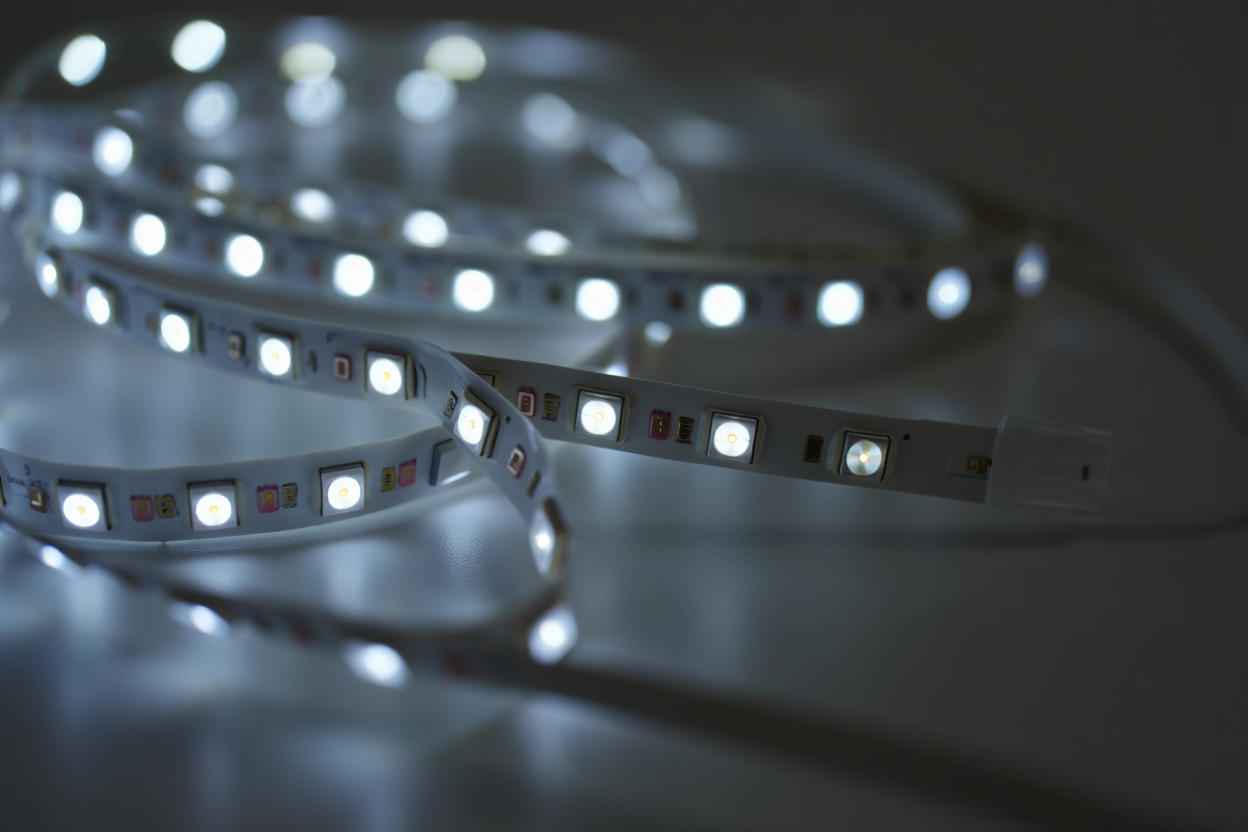
When shopping for LED strips, you may have noticed specifications like “30 LEDs per meter” or “120 LEDs per meter” and wondered what they actually mean. LED density is a critical factor that affects brightness, coverage, power consumption, and even the overall appearance of your lighting project. Choosing the wrong density can result in uneven illumination, dim spots, or unnecessary energy use. Understanding LED density is essential whether you’re installing accent lighting under cabinets, task lighting for a workspace, or creating a professional-grade backlighting setup.
In this article, I’ll break down LED density, explain its practical implications, and guide you on how to choose the right strip for your project.

Definition of LED Density
LED density refers to the number of individual LED chips installed per meter of strip. For example, a strip rated at 60 LEDs/m has 60 tiny LED bulbs spread evenly along every meter. Higher-density strips pack more LEDs per meter, producing brighter, more uniform light, while lower-density strips are better suited for accent or decorative lighting where extreme brightness isn’t needed.
This concept is important because LED strips with different densities behave differently in real-world applications. For instance, a 30 LEDs/m strip may leave visible dark gaps when used for under-cabinet lighting, while a 120 LEDs/m strip produces continuous, seamless illumination. Understanding this distinction ensures you select the right density for your intended project.
How LED Density Affects Brightness?
Brightness is directly influenced by LED density. Higher-density strips have more light-emitting diodes packed into the same length, resulting in increased lumens per meter. For example, a 30 LEDs/m strip with standard 0.2W LEDs may produce around 200 lumens per meter, while a 120 LEDs/m strip with the same LED type can reach over 800 lumens per meter.
This difference is particularly important for applications requiring uniform light distribution. Task lighting in kitchens or workbenches benefits from high-density strips, as lower-density strips may create visible spots of darkness. Conversely, low-density strips are adequate for ambient or decorative lighting where perfect uniformity isn’t crucial.
Power Consumption Considerations
Higher-density LED strips naturally consume more power. A 30 LEDs/m strip may require 4–5 watts per meter, whereas a 120 LEDs/m strip can draw 14–20 watts per meter. This increased power demand requires an appropriate power supply or driver to prevent dimming, flickering, or overheating.
It’s also important to consider heat generation. More LEDs in a confined space produce more heat, which can shorten LED lifespan if not managed properly. Using aluminum channels or heat sinks helps dissipate heat and maintain consistent performance. When selecting your strip, always check manufacturer recommendations for compatible drivers and maximum run lengths based on density.
Common LED Strip Densities and Their Applications
Low-Density LED Strips (30–60 LEDs/m)
Low-density LED strips are ideal for subtle lighting or decorative purposes. Their lower brightness makes them perfect for under-cabinet accent lighting, shelf illumination, or soft ambient light in bedrooms or living areas.
For example, a 30 LEDs/m strip installed under kitchen cabinets can provide a gentle glow to highlight countertops without overpowering the space. These strips are also energy-efficient and generate minimal heat, allowing for longer runs without additional cooling measures.
Medium-Density LED Strips (60–120 LEDs/m)
Medium-density strips balance brightness and energy consumption, making them versatile for many applications. They’re suitable for task lighting in kitchens, workbenches, or hobby areas where clear, uniform illumination is required.
For instance, a 60 LEDs/m full-color strip over a workbench can provide sufficient brightness to see details while keeping energy use moderate. Many indoor plant growers also use medium-density strips as supplemental light for herbs or seedlings.
High-Density LED Strips (120+ LEDs/m)
High-density strips are designed for projects requiring maximum brightness and uniformity. They are often used in commercial applications, professional photography, signage, or premium cabinet lighting.
For example, a 144 LEDs/m RGB strip used for backlighting a display case produces smooth, even color without noticeable gaps. High-density strips provide continuous illumination, but they require careful power management, heat dissipation, and often cost more upfront.
Factors to Consider When Choosing LED Density
Desired Brightness and Coverage
Choosing the right density depends on how much light you need and how uniform it should be. For accent lighting or subtle effects, low-density strips are usually sufficient. For workspaces, task areas, or displays, medium to high-density strips provide more consistent illumination without dark spots.
Reflective surfaces can amplify light from low-density strips, reducing the need for very high-density options in certain areas. Assess the lighting environment and project goals before purchasing.
Power Supply and Heat Management
High-density strips require stronger power supplies to handle increased wattage. Using an underpowered driver can cause dimming or flickering. Heat management is also critical; densely packed LEDs generate more heat, potentially shortening their lifespan. Aluminum mounting channels or heat sinks help maintain performance and longevity.
Cost Implications
More LEDs per meter increase the material cost of the strip. While high-density strips provide better light quality, they are more expensive upfront and consume more electricity. Balancing brightness requirements with budget constraints ensures efficient and cost-effective lighting.
Application Environment
Consider where the strips will be used. Outdoor or damp areas may require waterproof strips, which slightly reduce perceived brightness. Dimmable or color-changing applications may need medium or high-density strips to achieve smooth transitions. Always match the strip’s density and specifications to your specific project needs.
Technical Terms Related to LED Density
Lumens per Meter
Lumens per meter measures the total light output along a length of strip. Higher-density strips usually offer higher lumens per meter, but LED type and quality also play a role. Always check both density and lumens to ensure sufficient brightness for your application.
Watts per Meter
Wattage per meter scales with density. Higher-density strips require more power, affecting driver selection and energy cost. Calculating total wattage helps avoid overloading circuits and ensures reliable operation.
IP Rating and Enclosure Effects
Waterproof coatings or diffusers can slightly reduce brightness. While density determines LED placement, enclosures and protective coatings impact light output and distribution. Choose IP-rated strips if moisture or dust is present, but account for potential brightness loss in your calculations.
Installation Tips for LED Strips Based on Density
Placement and Mounting
Proper placement is critical for achieving even lighting and maximizing the benefits of LED density. High-density strips generate more light but also produce more heat, so they should ideally be mounted on aluminum channels or heat sinks. This improves heat dissipation and extends the lifespan of the LEDs. Low-density strips, while producing less heat, may need careful positioning to avoid uneven illumination.
Distance from the illuminated surface matters as well. For high-density strips, placing them slightly further from the surface can help diffuse light evenly, preventing hotspots. For low-density strips, closer placement or reflective surfaces may be needed to enhance light coverage. For example, under-cabinet lighting with 60 LEDs/m can achieve uniform illumination if mounted 6–12 inches above the countertop and complemented with a reflective backsplash.
Cutting and Connecting Strips
Most LED strips allow cutting at designated points to fit specific lengths. However, high-density strips require careful consideration of power distribution. Longer runs can experience voltage drops, causing dimming at the far ends. Power injection points or parallel wiring may be necessary to maintain consistent brightness. Low-density strips are less affected by voltage drops and can often run longer continuous lengths without additional wiring.
When connecting multiple strips, always follow manufacturer guidelines. Use appropriate connectors, solder joints, or compatible power supplies to ensure safe and reliable operation. Incorrect connections can lead to flickering, overheating, or premature failure.
Dimming and Control Compatibility
LED density also affects compatibility with dimmers and controllers. High-density strips may require PWM (Pulse Width Modulation) dimmers capable of handling higher current loads. Low to medium-density strips are generally compatible with most standard dimmers. For color-changing or smart LED strips, density impacts how smooth color transitions appear—higher-density strips provide more uniform and visually appealing results.
Common Mistakes When Choosing LED Density
- Assuming Higher Density is Always Better – While more LEDs provide brighter and smoother light, low-density strips may be perfectly adequate for accent or decorative purposes, reducing cost and energy use.
- Ignoring Power Supply Requirements – High-density strips demand stronger drivers. Underpowered supplies can lead to flickering or dimming.
- Neglecting Heat Management – Dense strips produce heat that can shorten lifespan if not mounted on heat-dissipating channels or aluminum profiles.
- Overlooking Application-Specific Needs – Consider the space, distance from surfaces, and purpose of lighting before choosing density. For instance, subtle under-cabinet mood lighting doesn’t require 120 LEDs/m.
Tips for Optimizing LED Density Use
- Use reflective surfaces or diffusers to enhance even light distribution from low-density strips.
- For high-density strips, always mount on heat-dissipating channels to maintain longevity.
- Avoid running very long strips without power injection to prevent voltage drop and uneven brightness.
- Choose strip density according to the application: subtle accents (30–60 LEDs/m), task lighting (60–120 LEDs/m), or professional brightness (120+ LEDs/m).
- Match controllers and dimmers to the strip’s density for smooth performance, especially with color-changing or RGB strips.
Conclusion
LED density determines how many diodes are packed into each meter of a strip, directly affecting brightness, uniformity, power consumption, and heat generation. Low-density strips are suitable for decorative or ambient lighting, medium-density strips work for task lighting and general illumination, and high-density strips are ideal for commercial or professional-grade projects requiring even, bright light.
Understanding LED density helps you select the right strip for your project, avoid uneven lighting, and ensure efficient energy use. Proper installation, power supply selection, and heat management are crucial for long-lasting performance. By choosing the correct LED density, you can achieve a visually appealing, functional, and durable lighting setup that meets your needs.
FAQs
Does LED density affect color uniformity?
Yes. Higher-density strips reduce visible gaps between LEDs, resulting in smoother, more uniform light and better color transitions, especially for RGB or color-changing strips.
Can I mix low and high-density LED strips in one installation?
Technically yes, but brightness and color may appear inconsistent. For uniform illumination, it’s better to use strips of the same density in the same area.
How do I calculate required power for a high-density strip?
Multiply the wattage per meter by the total length of the strip. Always choose a power supply rated 20–30% higher than the total wattage for safety and reliability.
Do waterproof LED strips require different density considerations?
Yes. Encapsulation or silicone coatings slightly reduce light output. You may need higher-density strips to achieve the same perceived brightness as non-waterproof versions.
Are high-density strips harder to install?
They require more careful handling due to increased heat and power needs. Aluminum channels and multiple power injection points may be necessary, but installation is manageable with proper planning.