
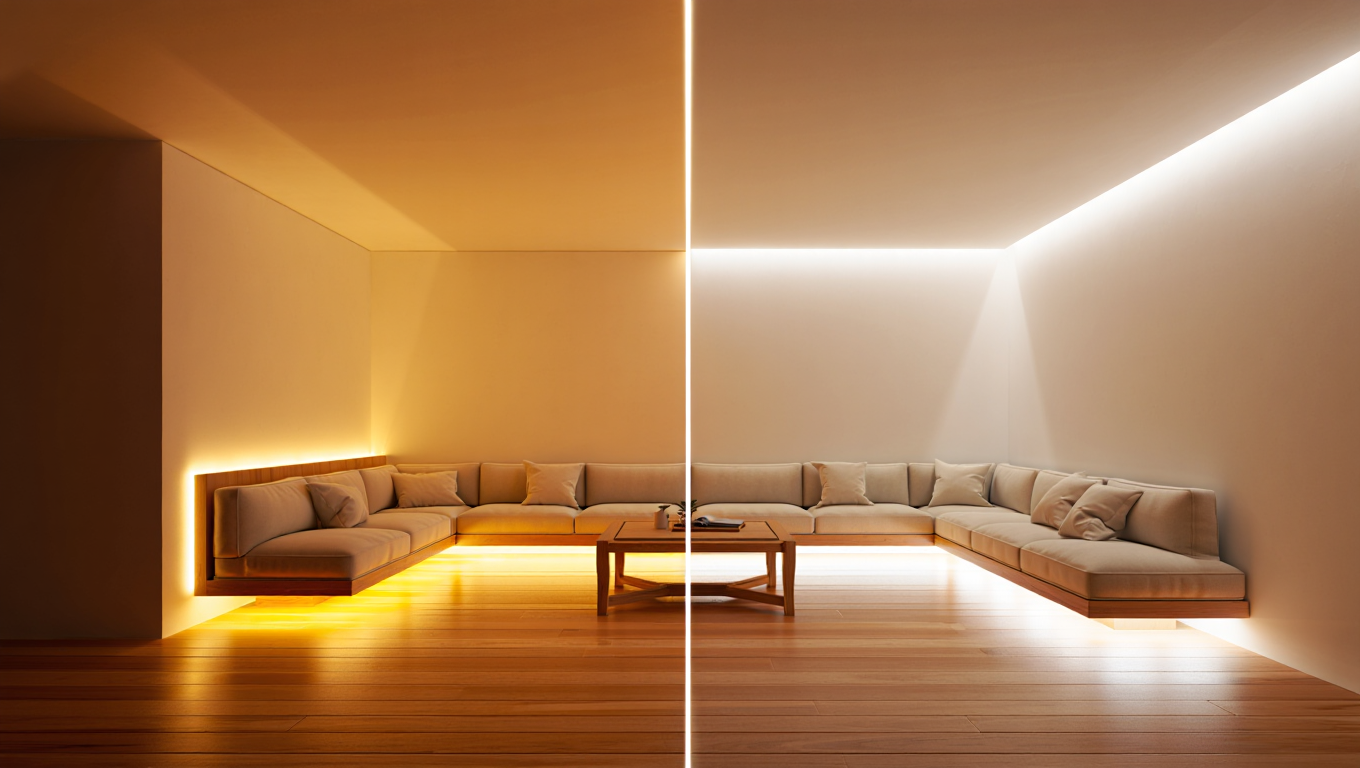
Choosing the right color temperature for LED strip lights can dramatically change the look and feel of any room. Many homeowners struggle with deciding between 3000K and 4000K, unsure which is better for their living room, kitchen, or bathroom. Understanding the differences between these two color temperatures is crucial, as it affects not only the ambiance but also functionality and comfort.
In this guide, we’ll break down the technical aspects of 3000K and 4000K LED strips, explain how each performs in different rooms, and provide practical tips for installation, brightness selection, and energy efficiency. By the end, you’ll have the confidence to choose the right lighting that balances aesthetics, comfort, and practicality.
What Color Temperature Means?
LED strip lights come in various color temperatures, measured in Kelvins (K). The Kelvin scale describes the warmth or coolness of light. A 3000K strip emits a warm white glow, similar to traditional incandescent lighting, creating a cozy and inviting environment. In contrast, 4000K produces a neutral white light that is brighter and more balanced, providing clarity and precision for tasks such as cooking, reading, or grooming.
Color temperature doesn’t just influence aesthetics—it impacts visual comfort and functionality. Warm tones are better suited for relaxing spaces, while neutral white helps with visibility and alertness. Choosing the correct Kelvin rating ensures your lighting complements both the room’s purpose and your lifestyle.
How Color Temperature Impacts Mood and Ambiance?
The ambiance created by LED strip lights can dramatically affect how a space feels. In living rooms, 3000K creates a soft, warm environment perfect for relaxing after a long day or entertaining guests in a comfortable setting. On the other hand, 4000K adds a modern, crisp feel, ideal for reading areas, study corners, or minimalist interior designs.
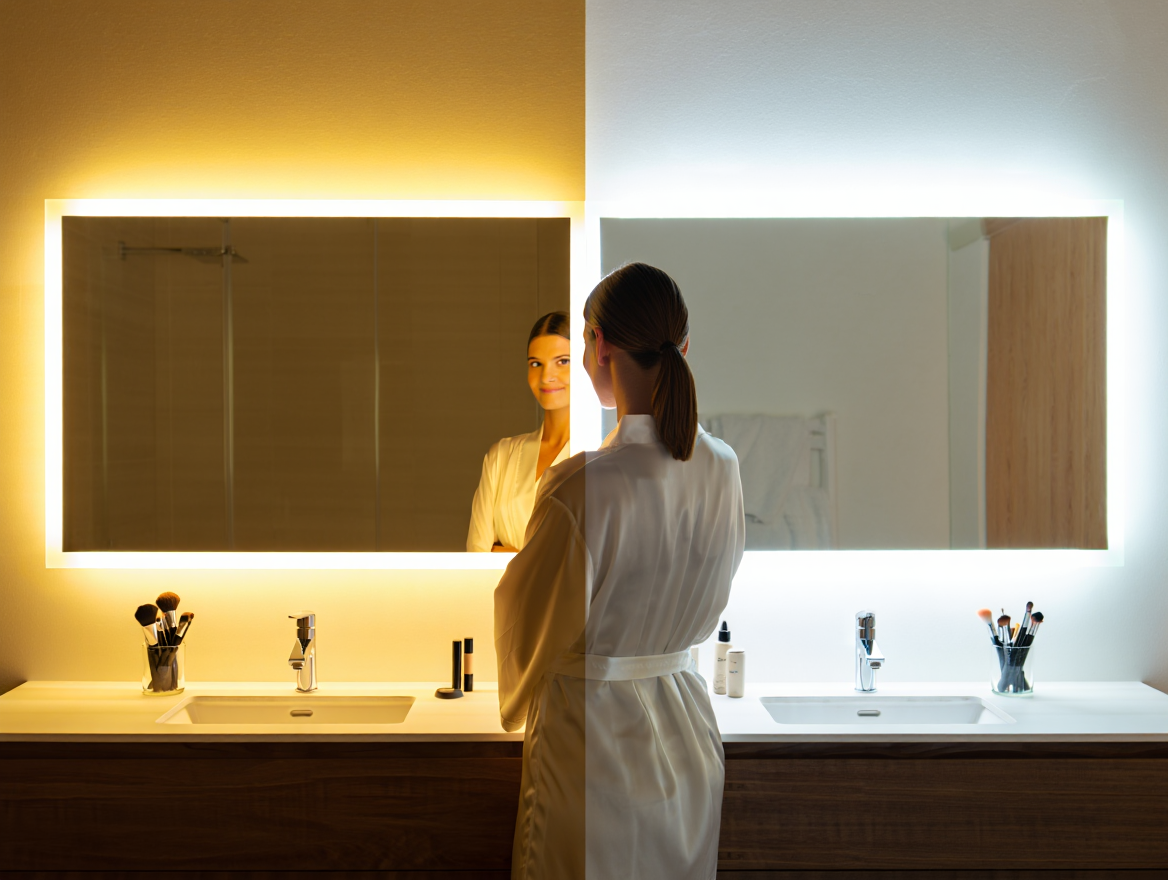
In kitchens, neutral 4000K light enhances visibility for food preparation and reduces shadows on countertops, making tasks easier and safer. Bathrooms benefit similarly; 4000K ensures precise lighting for grooming or makeup application, while 3000K can add a calming effect around tubs or mirrors for a spa-like atmosphere. Understanding how color temperature affects mood allows homeowners to tailor lighting to both functional and aesthetic needs.
Technical Considerations
When selecting between 3000K and 4000K strips, it’s also important to consider technical differences. Lumen output—the measure of brightness—may vary slightly between the two temperatures depending on LED quality and density.
Efficiency and energy consumption are generally similar, though higher brightness or longer strips will naturally draw more power. Choosing the right LED density and length for each room ensures consistent illumination and prevents underpowered or uneven lighting.
3000K vs 4000K — Room-by-Room Comparison
Living Room Lighting
The living room is a space for both relaxation and socializing, so the choice between 3000K and 4000K depends on the mood you want to create. A 3000K LED strip produces a warm, inviting glow, perfect for cozy evenings, family gatherings, or ambient lighting behind sofas and TVs. It complements wood furniture, soft textiles, and warm color schemes.
A 4000K LED strip, however, offers a brighter, more neutral light that works well for modern or minimalist interiors, reading nooks, or spaces with darker furniture. It enhances visual clarity and highlights architectural details, though it can feel less relaxing than 3000K if overused. Many homeowners balance both by installing 4000K for task lighting areas and 3000K for ambient accent strips, achieving flexibility for different activities.
Kitchen Lighting
Kitchens are primarily functional spaces where task lighting is essential. Neutral 4000K strips are generally recommended for under-cabinet lighting, islands, or overhead fixtures. They provide bright, consistent light that reduces shadows and ensures accurate color perception while cooking or preparing food. This makes it easier to see ingredients, read recipes, and avoid accidents.
3000K strips, however, can be used in dining or lounge areas of the kitchen, creating a softer, more intimate atmosphere for meals or socializing. Combining both color temperatures in different zones allows for a layered lighting effect that balances functionality with comfort. For example, bright 4000K strips under cabinets can illuminate work surfaces, while 3000K accent strips around a breakfast bar add warmth.
Bathroom Lighting
Bathrooms benefit from well-planned lighting for grooming, skincare, and relaxation. 4000K LED strips are ideal for vanity areas, mirrors, and general illumination, as neutral white light provides clear visibility and helps avoid shadows when shaving or applying makeup. It also enhances color accuracy, ensuring that cosmetics and hair appear true-to-life.
3000K strips, on the other hand, are better suited for areas designed for relaxation, such as around bathtubs, mirrors, or ceiling coves. Warm white light creates a spa-like ambiance and can make early mornings or late-night routines feel more comfortable. Strategically combining 4000K for tasks and 3000K for ambiance ensures the bathroom is both functional and inviting.
Choosing the Right LED Strip Type
Single-Color vs Tunable White
LED strips are available in fixed color temperatures (single-color) or tunable white (CCT adjustable). Single-color strips are ideal if you have a preferred lighting temperature and want consistent illumination.
Tunable white strips provide flexibility, allowing you to switch between 3000K and 4000K depending on time of day, mood, or activity. This is particularly useful in multi-purpose spaces, such as living rooms that function as both a lounge and a workspace.
LED Density and Brightness
LED density—measured in LEDs per meter—affects light uniformity. Higher-density strips produce more consistent, smooth illumination, while lower-density strips may show visible LED points and uneven light distribution.
For kitchens and bathrooms where clarity is crucial, higher-density strips paired with 4000K neutral light are recommended. For ambient living room lighting, lower-density 3000K strips can create a softer glow without harshness.
Dimming and Controls
Many modern LED strips are compatible with dimmers or smart controllers. Dimming not only adjusts brightness but can subtly shift perceived color temperature. For instance, dimmed 4000K strips may appear warmer, providing more flexibility in creating ambiance. Consider investing in compatible controllers to achieve the desired balance between functionality and mood lighting.
Installation Tips and Practical Advice
Installing LED strip lights correctly ensures even illumination, longevity, and optimal performance. Begin by measuring the intended areas carefully. For living rooms, measure the length of ceilings, coves, or behind TV units. In kitchens, measure under cabinets, islands, and accent zones, ensuring strips reach all work surfaces without gaps. Bathrooms require precise measurements around mirrors, vanities, and tubs, while also accounting for waterproofing requirements.
When planning placement, consider both the function of the room and the type of color temperature. For example, 3000K strips in living rooms can be placed behind sofas or along shelves to create ambient accent lighting, while 4000K strips should be installed under cabinets in kitchens to provide clear task lighting. Proper planning avoids harsh shadows, uneven brightness, or inefficient use of strips.
Next, consider the surface and mounting method. LED strips usually come with adhesive backing, but clean, dry surfaces are essential for long-term adhesion. For uneven or textured surfaces, mounting channels or clips are recommended to prevent sagging and maintain a straight, professional look. Using channels also protects strips from dust, moisture, and accidental damage.
Power Supply Considerations
Choosing the right power supply is crucial for both performance and safety. LED strips operate on low-voltage DC, typically 12V or 24V. Selecting a power supply with the correct voltage rating ensures the strips function properly. Additionally, calculate the total wattage of the installation by multiplying the strip’s wattage per meter by the total length. Experts recommend adding a 20–30% safety buffer to prevent overloading and voltage drop, which can cause dimming, flickering, or even damage to LEDs.
In moisture-prone areas like kitchens and bathrooms, select waterproof or IP-rated power supplies. Ensure they are installed in ventilated, dry locations to prevent overheating. For longer runs, provide multiple power feeds along the strip to maintain consistent brightness and prevent voltage drop, especially with 4000K strips where visual clarity is essential.
Wiring polarity is another critical consideration. Always match the positive and negative terminals from the power supply to the LED strip. Reversing polarity can cause the strip to not light up or permanently damage the LEDs. For RGB or tunable white strips, ensure all channels are correctly connected according to manufacturer instructions.
Maintenance and Longevity
Proper maintenance ensures that 3000K and 4000K LED strips continue performing well over their lifespan. Regularly inspect strips for dust, dirt, or signs of moisture ingress. Clean silicone or PVC casings with a soft, damp cloth. Avoid harsh chemicals, which can degrade the protective casing or cause discoloration.
For outdoor or bathroom installations, periodically check waterproofing seals, connectors, and silicone end caps. Replace or reseal any areas showing wear or leakage. Proper ventilation around power supplies and ensuring no excessive heat buildup prolong the life of LEDs. Average LED strip lifespan ranges from 25,000 to 50,000 hours, but poor installation or maintenance can drastically reduce this.
Smart usage, like turning strips off during the day or when not needed, not only saves energy but reduces wear. Dimming functions also help extend lifespan by reducing the load on individual LEDs. By maintaining a consistent voltage and avoiding overloading, homeowners can enjoy long-lasting, reliable illumination.
Common Mistakes to Avoid
Choosing between 3000K and 4000K strips involves more than personal preference. A common mistake is selecting a color temperature based solely on appearance without considering the room’s function. For example, installing 3000K in kitchens may look warm, but it can distort colors and reduce visibility, affecting meal preparation. Similarly, using 4000K in living rooms can create a stark, overly bright atmosphere that feels cold.
Another frequent error is ignoring LED density and brightness. Low-density strips in kitchens or bathrooms may produce uneven lighting, casting shadows or creating hotspots. Proper planning and selecting the correct lumen output for each space prevent this issue.
Incorrect power supply selection can cause flickering, dimming, or even strip failure. Always calculate total wattage, consider voltage drop, and select power supplies with adequate safety margins. Improper dimmer compatibility is also a common issue, especially with 4000K strips where task lighting performance is critical. Using incompatible dimmers can result in flickering or uneven dimming curves.
Finally, poor placement is a frequent oversight. For instance, installing strips in locations that cause glare, reflection, or direct eye exposure can reduce visual comfort and defeat the purpose of ambient lighting. Planning placement according to function, color temperature, and aesthetics is essential for optimal results.
Final Thoughts
Selecting the right color temperature for LED strip lights is a balance of aesthetics, functionality, and room-specific needs. Warm 3000K light is perfect for living rooms and ambient spaces, creating cozy, inviting environments. Neutral 4000K light excels in kitchens and bathrooms, providing clarity, color accuracy, and functional illumination.
For ultimate flexibility, tunable white strips allow switching between 3000K and 4000K depending on mood or task. Proper planning, including correct measurements, power supply selection, LED density, and placement, ensures even, efficient, and visually pleasing lighting. With careful installation and maintenance, homeowners can enjoy long-lasting, energy-efficient LED strip lighting that enhances every room’s look and feel.
FAQs
Can I mix 3000K and 4000K strips in the same room?
Yes, but do so intentionally. Mixing without planning may create inconsistent lighting. Use 4000K for functional areas and 3000K for accent zones to maintain visual harmony.
Which color temperature is best for reading areas?
4000K is ideal because it provides neutral, bright light that reduces eye strain and improves clarity for reading, working, or detailed tasks.
Will color temperature affect energy consumption?
Minimal impact. Both 3000K and 4000K strips consume similar energy. Brightness, LED density, and total strip length have a greater effect on power usage.
Which is better for bathroom lighting?
4000K is preferred for tasks like shaving or makeup application, while 3000K can be used for relaxing areas near bathtubs or mirrors.
Can I adjust 3000K strips to 4000K?
Only with tunable white (CCT adjustable) LED strips. Fixed 3000K strips cannot be changed; using tunable strips allows switching between warm and neutral white.